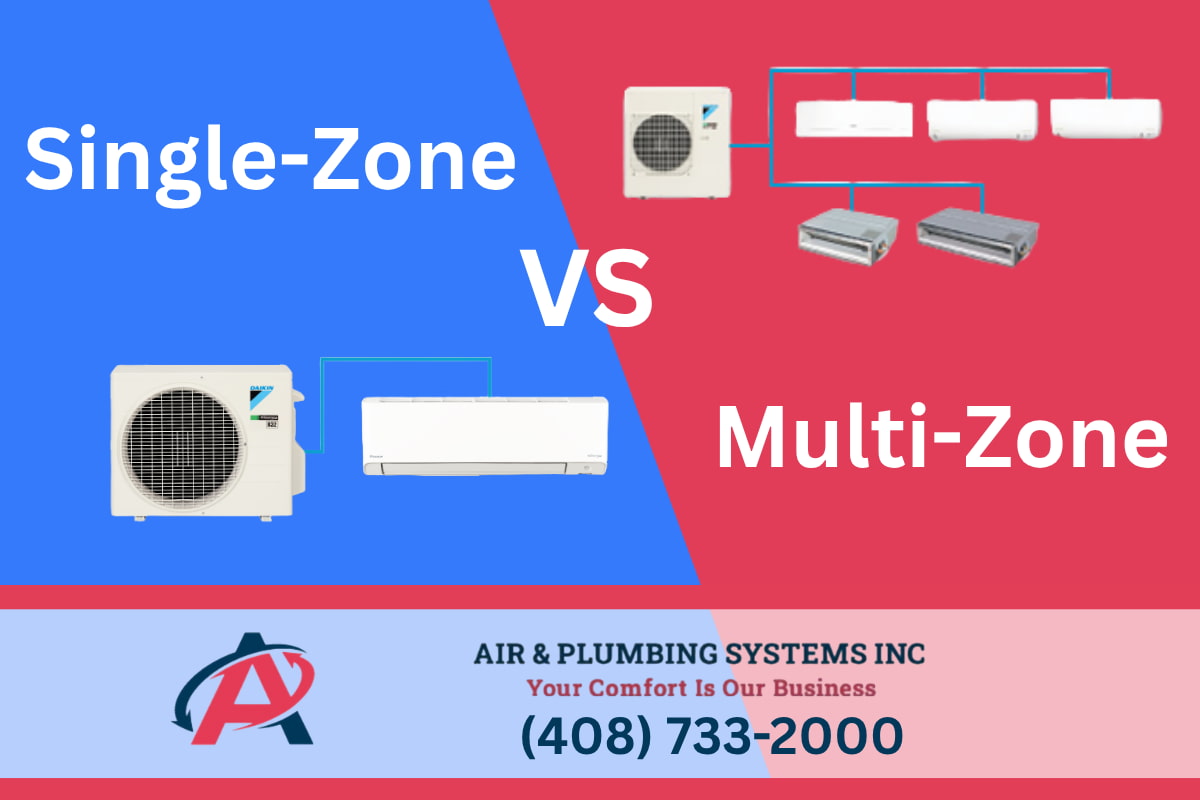
One thermostat fighting for the whole house, or a separate setting for every room — which one actually fits your home?
A single-zone heat pump runs one indoor unit off one outdoor condenser and is the right call for one problem room. A multi-zone heat pump runs several indoor units — bedrooms, living room, an office — off a single outdoor unit, each with its own thermostat, which is what most whole-home comfort upgrades in the Bay Area actually need.
Key Takeaways
- Single-zone = one outdoor unit, one indoor unit — best for a single hot room, an ADU, or a garage office.
- Multi-zone = one outdoor unit, up to 5–8 indoor units — best when different rooms need different temperatures at the same time.
- Foothill homes in Los Gatos, Saratoga, and Los Altos often need multi-zone because upstairs bedrooms and downstairs living space swing 10+ degrees apart.
- Rebate eligibility through Silicon Valley Clean Energy (SVCE) doesn’t change based on zone count — what matters is that you’re replacing gas with electric.
Table of contents
- Single-zone vs. multi-zone: what’s actually different
- When a single-zone heat pump makes sense
- When a multi-zone system wins
- Cost comparison: single-zone vs. multi-zone
- How to choose the right fit
- FAQs
Single-zone vs. multi-zone: what’s actually different
Both are ductless heat pumps — a wall-mounted (or ceiling-cassette) indoor unit connected to an outdoor condenser by a refrigerant line, no ductwork required. The difference is how many indoor units share one outdoor system. A single-zone system is simple: one outdoor unit, one indoor unit, designed to heat and cool one space. A multi-zone system connects one outdoor condenser to several indoor units, allowing each room or zone to have its own temperature settings.
Both configurations use inverter technology — a variable-speed compressor that modulates output to match demand instead of constantly switching on and off at full power. That’s why ENERGY STAR-rated heat pumps typically operate more quietly and cost less to run than older single-speed systems. The outdoor unit is sized by its cooling capacity, measured in tons (1 ton = 12,000 BTU/hr), not by its physical weight. For multi-zone systems, that capacity must be properly matched to the combined heating and cooling load of all connected indoor units.
When a single-zone heat pump makes sense
If your problem is one room, don’t pay for five. A single-zone Mitsubishi high-wall unit or a Daikin classic wall-mount is the right, cheaper answer when:
- A garage or ADU conversion in Fremont or Milpitas needs heating and cooling that the main system can’t reach.
- One room in your Menlo Park or Palo Alto home is always warmer or cooler than the rest of the house.
- You’re supplementing an existing central system rather than replacing it.
When a multi-zone system wins
California isn’t one climate, and neither is the inside of most houses. In foothill communities like Los Gatos, Saratoga, and Los Altos, a two-story home can see a real gap between an upstairs bedroom and a shaded downstairs den — multi-zone lets each room run its own setpoint off the same outdoor unit. In Cupertino, Sunnyvale, and Mountain View, the open, low-ceiling layouts common in Eichler homes make room-by-room control more useful than one central thermostat guessing for the whole floor plan. And for estate-scale homes in Atherton, Portola Valley, and Stanford, a Daikin Multi-Split with Emura indoor units in the bedrooms lets a guest wing sit cool and quiet while the main living space runs warmer.
According to the U.S. Department of Energy’s overview of ductless mini-split heat pumps, zoning like this is one of the main reasons ductless systems outperform central air in homes with uneven room-by-room demand — you stop paying to condition rooms nobody’s using.
Book Your Free Estimate
Cost comparison: single-zone vs. multi-zone
Multi-zone costs more upfront than a single-zone install, but it’s cheaper than installing separate single-zone systems room by room, because you’re only paying for one outdoor condenser and one electrical circuit instead of several.
| Setup | Outdoor units needed | Best for | Typical install cost range |
|---|---|---|---|
| Single-zone | 1 | One room, ADU, or garage conversion | $4,500 – $9,000* |
| Multi-zone (2–3 zones) | 1 | A few bedrooms plus a living area | $9,500 – $16,000* |
| Multi-zone (4+ zones) | 1 | Whole-home comfort, estate or multi-wing homes | $15,000 – $26,000+* |
*Approximate Bay Area pricing includes equipment, installation, standard permits, and basic connections. Final cost depends on system size (BTU), brand, installation complexity, and any required electrical panel upgrades.
Our full heat pump vs. central AC comparison breaks down how ductless zoning stacks up against a traditional ducted system if you’re still deciding between the two approaches entirely.
How to choose the right fit
- Count the rooms with a real comfort problem. One room = single-zone. Three or more = multi-zone.
- Get a Manual J load calculation (the industry-standard sizing calc) — undersized zones run constantly, oversized ones short-cycle and waste energy.
- Check your electrical panel. Older Bay Area homes, especially pre-1990 builds, sometimes need a panel upgrade before adding a multi-zone system.
- Confirm rebate eligibility before you commit to a configuration — see the rebate note below.
- Book a free, no-obligation in-home estimate so a certified heat pump installation technician sizes zones to your actual floor plan instead of a guess.
Homeowners often assume multi-zone is automatically disqualified from the best rebates — it isn’t. Silicon Valley Clean Energy’s (SVCE) $2,000 gas-furnace-replacement rebate and the statewide TECH Clean California program are based on replacing a gas system with an electric heat pump, not on how many indoor zones that heat pump feeds. Milpitas homeowners can also layer the “Go Electric, Milpitas!” city bonus through the same SVCE application. Amounts and funding cycles change, so we verify exactly what your home qualifies for during the free estimate.
Not Sure How Many Zones You Need?
Curious what multi-zone looks like in practice? See how we sized and ran a multi-zone mini-split installation for a real home, or check out this Mitsubishi ductless upgrade for a Sunnyvale Eichler home, where zoning solved exactly the open-floor-plan problem described above. Once your system is in, our heat pump winter-performance checklist keeps every zone running efficiently through the cold months.
FAQs
Yes. A common setup is a multi-zone system covering the main living areas plus a separate single-zone unit for a detached office or ADU that’s too far from the main outdoor unit to run efficiently.
Most residential multi-zone outdoor units, including the Daikin Multi-Split systems we install, support anywhere from 2 to 5 indoor units, and some larger models support up to 8. The right number depends on your home’s total heating and cooling load, not just room count.
Generally yes — programs like SVCE Home Rebates and TECH Clean California are based on replacing gas equipment with an electric heat pump, not on zone count. We confirm your exact eligibility during the free in-home estimate since amounts change through the year.
No — each indoor unit, single or multi-zone, runs its own inverter-driven fan independently, so adding zones doesn’t add noise to rooms that aren’t running. Daikin Emura and Mitsubishi high-wall indoor units are both rated for quiet bedroom-level operation.
Phone: (408) 733-2000
Email: info@airandplumbing.com
Whether your home needs one quiet zone or eight, Air & Plumbing Systems has spent over 25 years sizing heat pumps for Bay Area floor plans, from Eichler open-plans in Sunnyvale to multi-wing estates in Portola Valley. Call (408) 733-2000 for a free estimate, or book your appointment online in just a few clicks.
What Our Clients Are Saying