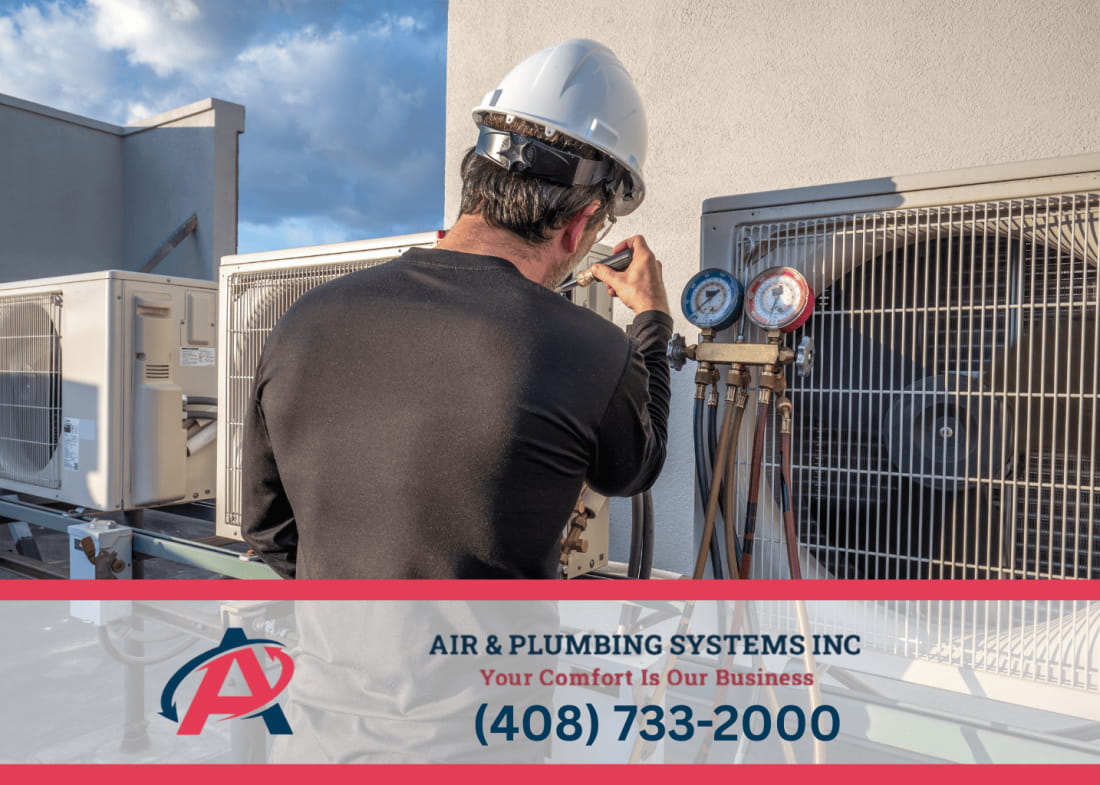
You come to your office on a hot Monday morning, and you find out that your HVAC system has broken down during the weekend. Your employees are wilting like greenhouse flowers in hours, your customers are running away faster than you can say air conditioning and you have a 15,000 emergency repair bill. Sound like a nightmare? This is what happened to one Bay Area restaurant owner last summer – and would have been avoided with the right HVAC knowledge.
The California Energy Commission estimates that Californian commercial buildings incur an average of 2.50 per square foot of HVAC energy expenses yearly. In the case of a standard 10,000 square foot business, that is 25,000 annually – money that could be reinvested in growth, employee benefits or your bottom line. The good news? Intelligent entrepreneurs who know their business HVAC systems usually cut these expenses by 20-40 percent.
It is not only about your commercial HVAC system being comfortable, but a strategic business asset that influences employee productivity, customer satisfaction, and operational costs. Regardless of whether you are running a technology company in San Francisco or a factory in Oakland, it is important to master the climate control system in your building in order to be successful in the long run.
Why Your Commercial HVAC Impacts More Than Temperature
Consider your HVAC system to be the circulatory system of your building. In the same way that bad circulation causes the rest of your body to suffer, so too does improper climate control on the rest of your business.
Productivity Effect: According to a study by Lawrence Berkeley National Laboratory, indoor air quality is directly related to cognitive ability. The lack of ventilation can decrease the productivity of employees by up to 15 percent, whereas the optimal temperatures (68-72degF) increase the performance by 10-15 percent. In the case of a company of 20 workers with a salary of 50000 a year, such a difference in productivity would translate to 150000 in economic value.
Customer Retention: Customers are chased out in a few minutes when they are not comfortable. Retail research reveals that shoppers spend a quarter of the time in stores where it is too hot and make 40 percent fewer purchases where the air is bad.
Reality of Energy consumption: Commercial buildings are estimated to consume approximately 40 percent of all energy used in the United States, and HVAC systems use approximately 40 percent of this energy consumption as reported by the U.S. Energy Information Administration. This amounts to high monthly costs to the customers of the Bay Area, where commercial electricity rates are about $0.20-0.30 per kWh.
Business vs. residential HVAC: Bay Area Business
The Demands in California
- Long runtime: Commercial systems usually run 12–16 hours a day (vs. 4–8 hours in residential).
- Variable loads: Businesses in the Bay Area face unique challenges with microclimates and temperature variances.
- Air quality requirements: California’s strict indoor air quality standards demand high-quality filtration.
- Energy regulations: Title 24 compliance requires complex controls and advanced efficiency levels.
Key Commercial Features
- Expandable design to grow with your business.
- Multi-zone capabilities to cover various areas of operation.
- High-level filtration compliant with California air quality regulations.
- Integration with building management systems for optimum control.
- Components with increased capacity designed for continuous operation.
Types of HVAC System: Your Ideal Bay Area Solution
Commercial HVAC System Types at a Glance
| System Type | Best For | Square Footage | Initial Cost | Energy Efficiency |
| Packaged Units | Small-medium businesses | Up to 10,000 sq ft | $5,000-$15,000 | Good (14-16 SEER) |
| Split Systems | Quiet operations needed | 2,000-8,000 sq ft | $6,000-$20,000 | Excellent (16-20 SEER) |
| VRF Systems | Multi-zone buildings | 5,000-50,000 sq ft | $15,000-$40,000 | Outstanding (18-22 SEER) |
| Chilled Water | Large facilities | 50,000+ sq ft | $25,000-$100,000+ | Excellent (0.5-0.8 kW/ton) |
The Packaged Units: The Workhorses
Ideal with small businesses such as small restaurants, retail shops, or professional offices up to 10,000 square feet. These rooftop units are common in Bay Area strip malls and stand-alone buildings.
Pros:
- Lower initial investment ($5,000–$15,000)
- Easy installation and maintenance
- Space-efficient design
- Works well in businesses that have regular heating/cooling requirements
Cons:
- Poor zoning capacity
- Reduced life cycle in coastal salty places
- Inefficient as compared to newer technologies
Split Systems: The Universal Option
Perfect in a business environment, medical practice, or office where noise is not needed. Common in converted Bay Area buildings where there is little outdoor space.
Key Benefits:
- Quiet indoor operation
- Portable installation
- Great energy efficiency (16–20 SEER ratings)
- Higher humidity than packaged units
VRF Systems: The Intelligent Technology
Ideal in mixed-use buildings, restaurants with different thermal zoning, or technology firms with server rooms and office areas.
Advanced Features:
- Heating and cooling in various areas at the same time
- Individual room control
- Heat recovery capabilities
- Excellent efficiency (18–22 SEER)
Real Case: A law firm in San Francisco saved 35% of its energy use and $18,000 a year after replacing its traditional systems with VRF technology.
The Hidden Costs of HVAC Neglect
Case Study 1: A Palo Alto tech company ignored routine maintenance for three years. Result: Complete system failure during a heat wave, $22,000 in emergency repairs, and $8,000 in lost productivity from two days of office closure.
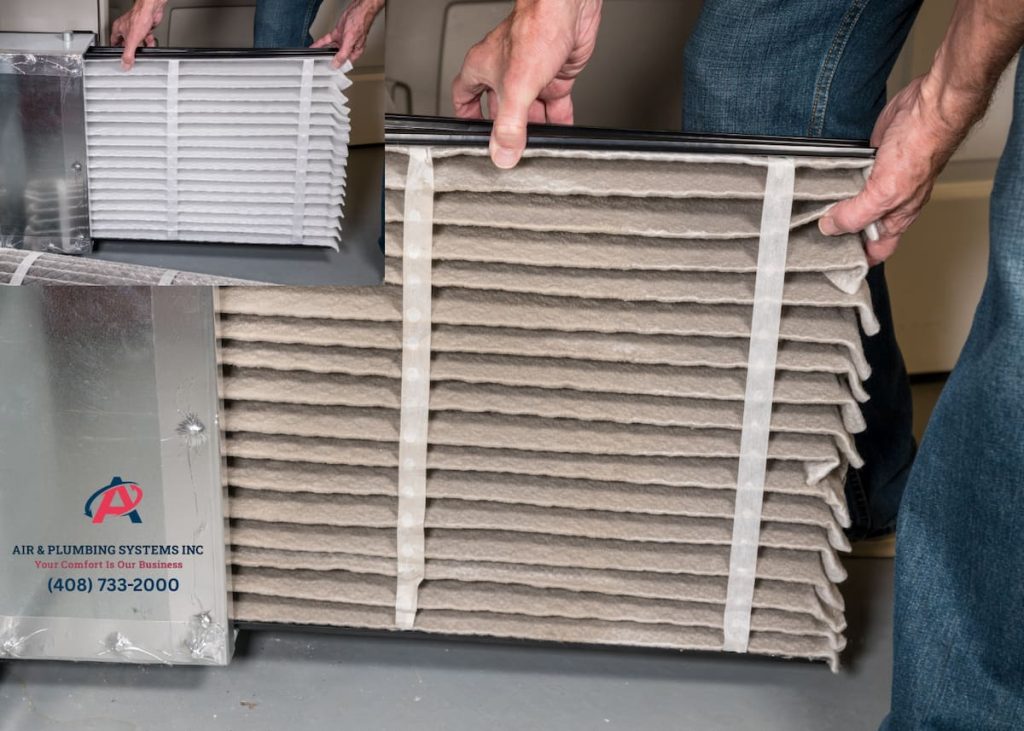
Case Study 2: An Oakland restaurant’s dirty filters caused 30% efficiency loss, adding $400 monthly to PG&E bills – $4,800 annually that could have been prevented with $50 quarterly filter changes.
Loss of Efficiency with Advancing Age
Year 1: Dirty filters consume more energy by 5–10%
Year 2: Leaks of refrigerant and wear of parts contribute another 10–15%
Year 3: System works 40 times more to do the same
Year 4: Significant component malfunctions and emergency maintenance
Intelligent Maintenance Solutions to Bay Area Companies
Seasonal Preparation Checklist
Preparation of Spring (March–April)
- Wipe or change filters after winter dust
- Check refrigerant level prior to summer demand
- Check and clean up outdoor coils in winter debris
- Test thermostats and controls
- Test emergency systems
Fall Preparation (September–October)
- Check heating parts prior to winter
- Clean indoor duct and coils
- Check and seal ductwork connections
- Crack or damage test heat exchangers
- Keep up maintenance records
Filter Management Across the Industries
Restaurants: Every month replaced because of grease and cooking particles
Production: Changes every two weeks based on the dust levels
Professional Offices: Standard environment quarterly changes
Medical/Dental: Air quality filters of high-MERV monthly
Pro Tip: Purchase filters in large quantities with suppliers such as Grainger or local distributors at 30–40 percent discount
Technology Integration
The building management systems of today are capable of:
- Automatic settings depending on the occupancy sensors
- Track energy use and detect efficiency problems
- Give warning before issues lead to system failures
- Maximize performance with weather predictions and utility prices
- Produce energy audit and compliance reports
Energy Efficiency: Your Underground Secret to Edging up PG&E Rates
With PG&E commercial rates continuing to climb, energy efficiency isn’t just environmentally responsible – it’s essential for profitability. The average Bay Area business can reduce HVAC energy consumption by 25-40% through strategic upgrades and operational changes.
Immediate Cost-Reduction Strategies
Programmable Controls ROI:
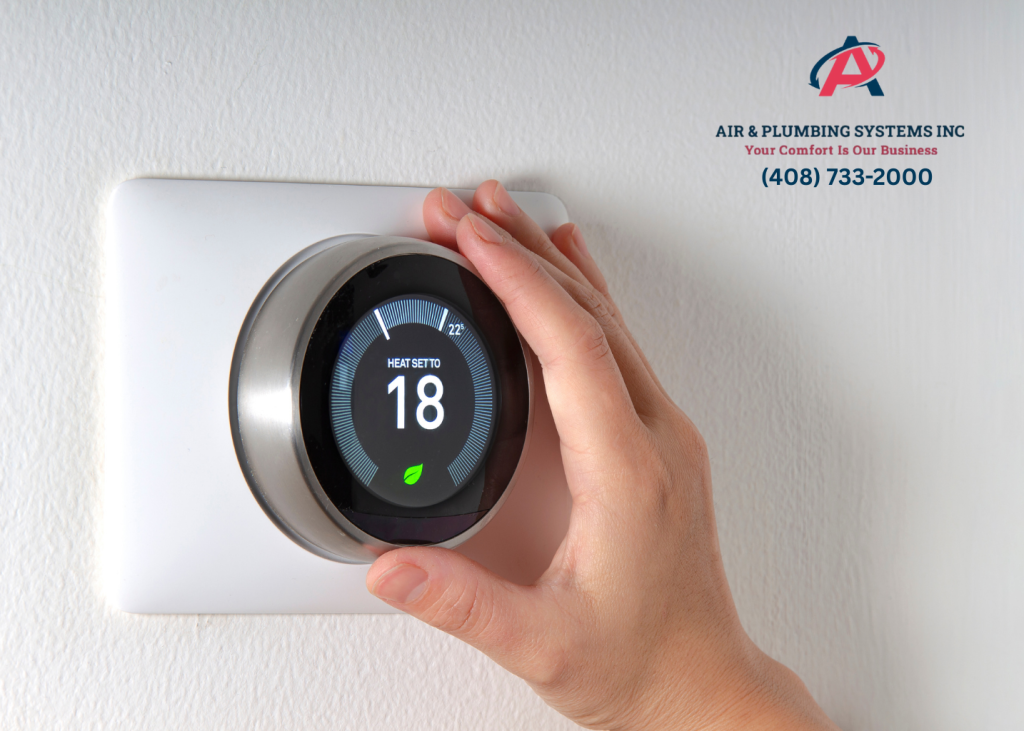
Investment: $500-2,000 for smart thermostats
Annual savings: $1,200-3,600 for typical 5,000 sq ft businessPayback period: 3-8 months
Zoning System Benefits:
Energy reduction: 20-30% through targeted heating/cooling
Comfort improvement: Individual area control
Equipment longevity: Reduced runtime on unused zones
Equipment Upgrade Impact
Real Data from Bay Area Businesses:
- A San Jose medical practice saved $2,100 annually after upgrading to high-efficiency equipment
- An Oakland warehouse reduced energy costs by 42% with new VRF system
- A San Francisco restaurant cut utility bills by $350/month with smart controls
Available Incentives:
PG&E rebates: Up to $15,000 for efficient commercial equipment
California Energy Commission programs: Additional rebates for qualifying businesses
Federal tax credits: 30% credit for certain energy-efficient installationsAccelerated depreciation: Section 179 deductions for business equipment
Ready to future-proof your commercial HVAC system?
FAQs
How many years do business HVAC systems last in Bay Area coastal conditions?
15-20 years of good maintenance. Salt air along the coast is capable of decreasing the life span by 23 years unless coils are cleaned regularly and coated with corrosion protection. Plan biannual checks and make use of marine grade parts where feasible.
What HVAC system of my business in the Bay Area should be?
Size varies on a variety of factors other than square footage. Sizing is influenced by microclimates of the Bay Area, building orientation and the quality of insulation and patterns of occupancy. Professional Manual J load calculation is a must – find certified contractors via ACCA.org when it comes to proper sizing.
Do I need to do significant HVAC investments to cut PCG&E expenditures?
Yes, by means of operational improvements:
– Change filters on a regular basis (5-10% energy savings)
– Use programmable thermostats (10-15% savings)
– Seal air around door/windows (5-8% savings)
– Keep a regular temperature (do not change too much)
– Set off-peak operation where feasible.
What are HVAC permit regulations in California?
The majority of commercial HVAC undertakings demand permit and inspection. Get in touch with your local building department to be sure of what is needed. The work should be done by thecontractors, whose license is C-20, and should comply with Title 24 energy efficiency.
Where can I get qualified Bay Area HVAC contractors?
Look for contractors with:
– Approved California C-20 contractor license.
– Better Business Bureau accreditation.
– Certifications of manufacturers (Carrier, Trane, etc.).
– Local references in like businesses.
– Refrigerant handling EPA certification.
How to act in a power outage in the Bay Area which affects HVAC?
Preparedness measures in case of an emergency:
– Install the backup power to the critical systems.
– Portable cooling/heating units standby.
– Have emergency contact list to serve 24/7.
– Look at generator capacity of crucial operations.
– Insurance claim document down time.
Phone: (408) 733-2000
Email: info@airandplumbing.com
Ready to upgrade your Commercial HVAC system? Contact the Bay Area’s trusted HVAC experts for a free consultation and personalized assessment!
What Our Clients Are Saying