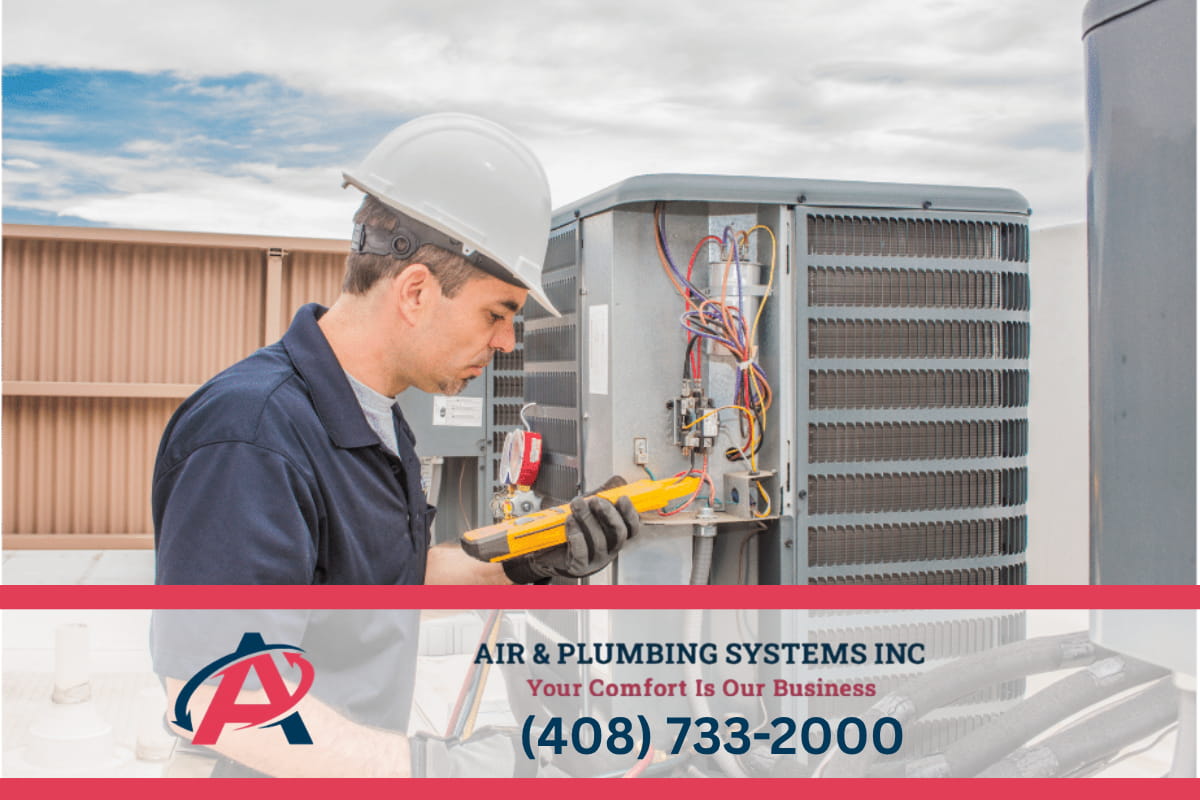
Your AC stops blowing cold air at 2 p.m. on a 97°F Sunday. Your furnace clicks but refuses to fire the morning of a family visit. The smart thermostat illuminates the “service required” message and you have a baby sleeping upstairs. You don’t need to have a 5-day appointment window, you need someone today.
Not all “no cool air” calls require same-day service—some issues can be safely addressed on Tuesday and avoid the after-hours premium. The remainder of this guide explains how to distinguish, what to do meanwhile, and what a true same-day visit entails in the Bay Area.
TL;DR
- Same-day in the Bay Area typically means under 4 hours during peak summer, faster spring/fall. Weekends count.
- Fixed-price diagnostics mean you know the service-call cost before the tech rolls — no “while we’re here” surprises.
- When the call is urgent (medical risk, vulnerable household members, indoor temps over 85°F, no heat under 50°F, gas smell, water leak) — call immediately.
- When it can wait (the unit cycles on and off but still cools, weird noise but still works, mild discomfort on a cool day) — schedule for the next business day and save the after-hours premium.
- What to do before the tech arrives: check the thermostat, the breaker, the air filter, and the outdoor unit for debris. About 1 in 5 same-day calls turns out to be one of these four things.
Table of contents
What “same-day” actually means in the Bay Area
The phrase “same-day service” gets thrown around loosely. Here’s the version that matters when you’re sweating in your living room:
- Same-day = your service appointment lands on the same calendar day you called. Not “we’ll call you back tomorrow.” Not “we can fit you in Thursday.”
- In Bay Area peak summer (June–September, especially during a heatwave), the realistic response window is 2–6 hours from call to truck-in-driveway. Demand spikes; everyone calls at once.
- Off-peak (spring, fall, mild winter days), same-day usually means within 2–4 hours, sometimes within the hour.
- Weekends count. AC doesn’t take Saturdays off, and neither should service.
The same-day summer service is like an urgent care clinic during flu season—the doors are open, but if everyone else calls at the same time, you have to wait a little longer. The morning call time is better than the 3 p.m. rush.
Air & Plumbing Systems have a fixed price for diagnostics, which is the price of the diagnostic visit itself, before the tech even leaves the shop. You’re not paying “let’s see what it looks like when we get there”. This is particularly important if you are already stressed and don’t want to add another surprise to your list of problems.
Need same-day service right now?
When to call right now vs. wait until tomorrow
Use this as a triage. Not every HVAC hiccup is an emergency, and a non-emergency call after 5 p.m. on a Friday costs more than the same call Monday at 9 a.m.
Call same-day — don’t wait
- Indoor temps already over 85°F and the AC isn’t responding, especially with elderly residents, infants, or anyone with respiratory conditions.
- Winter indoor temps under 55°F and the heat isn’t responding.
- You smell gas near the furnace. Get out of the house, then call.
- Water dripping from the indoor air handler or pooling around the furnace. Could be a clogged condensate drain, frozen coil, or worse.
- The outdoor unit is making a screeching, grinding, or banging noise. Compressor or fan motor failure in progress — running it longer multiplies the repair bill.
- Burning electrical smell or breaker trips when you try to start the system. Shut it off at the breaker and call.
- AC blowing warm air during a heatwave forecast over 95°F. Delaying turns a quick refrigerant or capacitor fix into days of heat misery.
Schedule for the next business day
- Mild temperature mismatch — house gets to 76°F when set to 72°F, but the system runs.
- A new sound that’s not screeching/grinding — a hum or rattle that started this week but the unit still cools/heats normally.
- Mild discomfort on a cool day — 75°F outside, you can open windows tonight.
- You want a tune-up, an estimate, or a second opinion, not a fix.
When in doubt, call. The dispatcher can triage on the phone and tell you whether you’re a true same-day or a Tuesday-morning slot — and that conversation is free.
What to check before the tech arrives
About 1 in 5 same-day HVAC calls turns out to be something you can fix in two minutes. None of these will void a warranty or break anything. Run through them while you wait—sometimes the tech ends up not being needed at all.
Step 1: Check the thermostat
Make sure it is on “Cool” (or “Heat”) and not “Off” or “Fan only”. Verify that the setpoint is lower (or higher) than the room temperature. If the screen is blank, change the batteries—even on a “smart” thermostat that is hardwired. Many have a battery backup that lasts for a couple of years.
Step 2: Check the breaker
Go to the electrical panel. Check for any breaker that is in the middle (tripped) position and has an “AC,” “Furnace,” “HVAC” or “Air Handler” on it. Turn it completely OFF and then ON again. If it happens again as soon as you switch the system on – STOP, it’s an electrical problem and you need the tech.
Step 3: Check the air filter
Pull the filter out of the return grille or air handler. If it’s gray, fuzzy, or you can’t see light through it, it’s choking the system — common cause of frozen coils in summer and ignition lockouts in winter. Replace it (most homes need a new filter every 1–3 months — our furnace filter maintenance guide has the schedule).
Step 4: Check the outdoor unit
Walk outside to the condenser (the big metal box). Clear any leaves, fence-line vegetation, or debris that’s blocking airflow around the unit — Bay Area homeowners in Saratoga, Los Gatos, and the foothill cities are especially prone to this after windy days. Make sure the disconnect switch (the small box on the wall next to the unit) is in the ON position.
Step 5: If still nothing — call
You’ve done your part. Note what you did and what the outcome was so you can explain to the tech. When the homeowner has eliminated the obvious, most diagnoses are quicker. We cover the full diagnostic flow in our post on AC not cooling and AC not turning on — useful background reading if you want to know what’s about to be checked.
What a same-day visit looks like
When the tech arrives, here’s the typical flow for a residential AC or furnace call:
- Brief intake conversation (5–10 min). Symptoms, when it started, what you already tried. This is where having Step 1–4 from above already done pays off.
- System inspection (15–30 min). Indoor air handler + thermostat + filter + electrical + outdoor condenser. Tech checks refrigerant pressures (if AC), ignition sequence (if furnace), capacitor health, refrigerant charge, blower motor draw, and condensate drainage.
- Diagnosis + quote (5 min). Tech tells you what’s wrong, what it costs to fix, and (if relevant) what the repair-vs-replace math looks like for an older system. You decide.
- Repair on the spot — if parts are on the truck. Common parts like capacitors, contactors, igniters, run capacitors, blower motors, thermostats, and refrigerant top-offs are usually stocked. Less-common parts (control boards, compressors, evaporator coils) need a follow-up next-day appointment.
- System test before the tech leaves. Indoor temp dropping (or rising) at the registers, refrigerant pressures in spec, no error codes — confirmed before signature.
When repair isn’t worth it
Same-day visits sometimes end with a hard conversation: the system is 15+ years old, the failed part is the compressor or heat exchanger, and the repair cost is more than 50% of a new system’s price. In that case the tech should hand you a clear comparison of repair vs. replacement, including any current Bay Area rebates that apply if you’re switching to a heat pump.
For the math behind the repair-vs-replace decision, see our full HVAC installation cost guide for California — it covers what a new system actually costs by tonnage, by city, and how to think about the trade-off when a same-day repair starts to look like the wrong call.
What it costs
There are three line items on most same-day HVAC visits in the Bay Area:
- Diagnostic/service-call fee: Typically ranges from $49 to $129, depending on the provider, time, and day of service. With Air & Plumbing Systems’ fixed-price diagnostic model, the cost is disclosed upfront before the technician is dispatched, so you know exactly what to expect.
- Repair labor + parts (if you proceed): highly variable. Typical same-day fixes in the Bay Area:
- Capacitor replacement: $150–$400
- Contactor replacement: $150–$300
- Refrigerant top-off (R-410A, ~2 lbs): $250–$500
- Igniter / hot-surface ignitor on a furnace: $200–$400
- Thermostat replacement (non-smart): $200–$350; smart thermostat: $300–$550 installed
- Blower motor: $400–$900
- Major: compressor or evaporator coil: $1,500–$3,500 (this is usually the repair-vs-replace conversation)
- After-hours / weekend premium: $50–$150 added to the diagnostic fee at some shops; not all charge it. Worth asking on the phone before booking.
A same-day service call that requires a common part replacement typically costs between $300 and $700, including the diagnostic fee. This is the typical price range for an emergency repair with a straightforward solution.
If the technician determines that your 18-year-old furnace has reached the end of its lifespan, the conversation shifts from repair to replacement. While a full HVAC installation usually cannot be completed the same day, you’ll receive the diagnostic results and a clear replacement estimate during the visit, allowing you to make a decision without delay.
Sources
Need same-day service?
FAQs
During peak summer (June–September), expect 2–6 hours from call to driveway, sometimes longer if a regional heatwave has every household calling at once. Off-peak, 2–4 hours is typical, sometimes within the hour. Calling first thing in the morning beats the afternoon rush.
Yes. Air & Plumbing Systems provides same-day HVAC service on Saturdays during regular business hours. Sunday service is available by prior appointment. Diagnostic fees remain the same as on weekdays, with no additional weekend surcharge.
Reputable providers fix the diagnostic fee up front so you know the number before the tech arrives — typically $49–$129. Avoid anyone who refuses to quote the diagnostic fee on the phone. See our fixed-price diagnostic page for details on how that works at Air & Plumbing.
Most of the time, yes. Trucks are stocked with the parts that fail most often — capacitors, contactors, igniters, thermostats, refrigerant. Less common failures (control boards, blower motors of unusual size, compressors) need a follow-up next-day appointment, but the diagnosis happens same-day.
Probably not damage, but you may have iced up the indoor coil. Shut the system OFF at the thermostat. Let the coil thaw for 1–2 hours (warm Bay Area summer afternoons help). Many “won’t cool” calls become “works fine after a thaw + filter change,” especially in inland cities like San Jose, Fremont, and Milpitas where summer heat compounds the problem.
For diagnostic and most repairs, yes — the tech needs to test indoor and outdoor units, and you’ll need to approve any repair charges before work proceeds. For a full system replacement following a same-day diagnosis, the install itself is scheduled separately.
Depends on the provider. Some charge a $50–$150 after-hours premium on top of the diagnostic. Air & Plumbing Systems keeps the diagnostic fee consistent. Always ask on the phone — it’s a fair question and a clear answer is a good sign.
Air & Plumbing Systems handles same-day calls across San Jose, Santa Clara, Sunnyvale, Cupertino, Mountain View, Palo Alto, Los Altos, Saratoga, Los Gatos, Campbell, Milpitas, Fremont, Newark, Union City, Menlo Park, Atherton, Portola Valley, and the surrounding Bay Area. We also serve Santa Cruz County. Call (408) 733-2000 to confirm coverage for your address.
Phone: (408) 733-2000
Email: info@airandplumbing.com
AC stopped cooling? The furnace failed before the next cold snap? Don’t wait – call (408) 733-2000 for fast same-day service or book your appointment online in just a few clicks.
What Our Clients Are Saying