California homes see it all—scorching summers, chilly nights, and those unpredictable in-between days. So when your HVAC starts hinting that retirement is near, you’re faced with a tricky choice: heat pump or central AC? One promises energy efficiency and year-round comfort, while the other offers reliable cooling that’s been the standard for decades. The tricky part is figuring out which system fits your lifestyle, your climate zone, and, of course, your wallet.
If you’re a homeowner in Mountain View, Sunnyvale, Santa Clara, or anywhere across the Golden State, this decision isn’t just about immediate comfort. With California’s diverse microclimates, soaring energy costs, and the state’s aggressive push toward electrification, choosing the right HVAC system is like picking the foundation for your home’s energy future.
Let’s break down this cooling and heating conundrum so you can make the smartest choice for your specific situation and location.
Understanding the Technology: Heat Pumps vs. Central AC Systems
Before diving into Bay Area specifics, let’s get crystal clear on what we’re comparing. Central air conditioning is your traditional cooling workhorse – it’s been keeping California homes comfortable since the 1950s. These systems pull warm indoor air, chill it using refrigerant coils, and circulate that cool air through your ductwork. Think of it as a one-trick pony, but it does that trick really, really well.
Heat pumps are the versatile athletes of the HVAC world. During Fremont’s hot summers, they work exactly like central AC units. But here’s where they get clever – when those cool Cupertino evenings roll around, they reverse their refrigerant flow and extract heat from outdoor air to warm your home. Even when it’s 40°F outside, there’s still usable heat energy that these systems can capture and move indoors.
How Heat Pumps Work
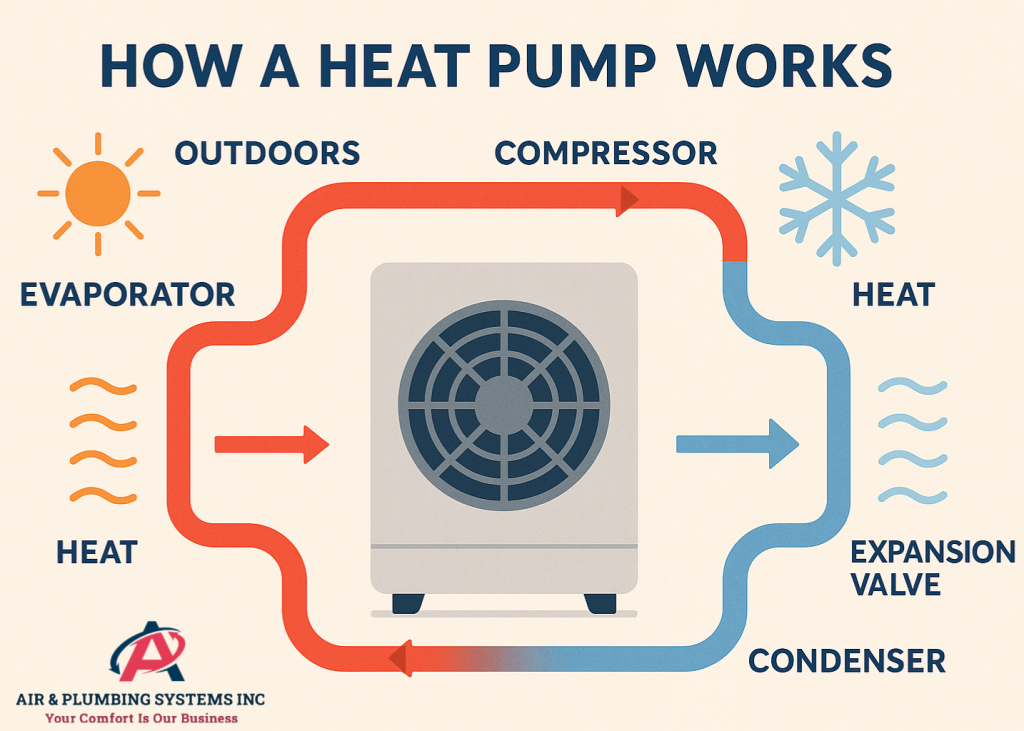
Cooling Mode (Summer in San Jose):
- Outdoor unit extracts heat from indoor air
- Heat is released outside
- Cool air circulates through home
Heating Mode (Winter in Los Altos):
- Outdoor unit extracts heat from outside air
- Heat is concentrated and moved indoors
- Warm air circulates through home
The process is remarkably efficient because you’re moving existing heat rather than creating it from scratch – like using a conveyor belt instead of building each package by hand.
California’s Climate Zones: Perfect Heat Pump Territory
California’s climate diversity rivals its cultural diversity, and this variety actually works in heat pumps’ favor. Let’s break down how different Bay Area and California regions fare with each system:
Coastal Areas (San Mateo County, Menlo Park, Portola Valley): These areas rarely see temperatures below 35°F or above 85°F. Heat pumps absolutely dominate here, maintaining 300-400% efficiency year-round. Traditional central AC paired with gas heating seems almost wasteful in these mild conditions.
Inland Valleys (San Jose, Santa Clara, Sunnyvale, Milpitas): Summer temperatures can spike to 100°F+, but winters rarely drop below 30°F. Modern heat pumps handle these conditions beautifully, though you might see slightly reduced efficiency during those rare cold snaps.
Foothill Communities (Los Gatos, Saratoga, Los Altos Hills): These areas experience more temperature variation, but rarely extreme enough to challenge today’s cold-climate heat pumps. The elevation changes mean more heating demand, making heat pumps’ dual functionality particularly valuable.
Mountain and Desert Regions (Lake Tahoe, Inland Desert Areas): These represent the minority of California where traditional systems might still make sense, as temperatures regularly drop below 20°F where heat pump efficiency decreases significantly.
Energy Efficiency and Real California Cost Analysis
Here’s where your utility bills get interesting. PG&E customers in the Bay Area are paying some of the nation’s highest electricity rates, making efficiency absolutely crucial.
| System | Cooling | Heating | Annual Cost |
| Heat Pump | 16–25 SEER | 8–13 HSPF | $800–$1,200 |
| Central AC + Gas Furnace | 14–21 SEER | 80–95% AFUE | $1,200–$1,800 |
Real Savings (per year)
- Palo Alto (2,200 sq ft): $600–$900
- San Jose (1,800 sq ft): $400–$700
- Mountain View (2,500 sq ft): $700–$1,100
Installation Costs
- Northern CA (Bay Area): Heat Pump $4,500–$9,500 | Central AC $3,500–$7,500
- Southern CA: Heat Pump $3,800–$8,200 | Central AC $3,000–$6,800
Incentives (2025)
- Federal Tax Credit: 30%
- TECH Clean California: up to $3,000
- Local Air District: $500–$1,500
- PG&E Rebates: $500–$2,000
Contact the Bay Area’s trusted HVAC experts
Environmental Impact: Meeting California’s Green Goals
California isn’t just asking residents to go green – it’s practically demanding it. By 2030, the state aims to reduce greenhouse gas emissions by 40% below 1990 levels, and your HVAC choice plays a starring role in this environmental drama.
Carbon Footprint Comparison (Annual):
- Heat pump in Santa Clara: 2.1 tons CO2 equivalent
- Central AC + gas furnace in Santa Clara: 4.3 tons CO2 equivalent
When you multiply this across Campbell’s 40,000+ homes, or Sunnyvale’s 60,000+ households, the environmental impact becomes staggering. Heat pumps are literally helping California breathe easier.
The environmental benefits multiply if you’re considering solar panels (and in the Bay Area, why wouldn’t you?). Heat pumps and solar systems work together like Batman and Robin – the solar panels generate clean electricity during the day, which the heat pump uses efficiently around the clock.
Installation Realities: What Bay Area Homeowners Need to Know
Let’s talk about the nuts and bolts of actually getting these systems installed in your Atherton ranch or Campbell townhome.
Electrical Requirements: Most Bay Area homes built after 1980 can handle heat pump installations without major electrical upgrades. However, older homes in established neighborhoods like downtown Palo Alto or Los Gatos might need panel upgrades, adding $1,500-$3,500 to installation costs.
Permitting in Different Cities:
San Jose: Streamlined online permitting, typically 2-3 weeks
Palo Alto: More stringent review process, 4-6 weeks
Santa Clara: Expedited green building permits available
Mountain View: Standard residential permits, 3-4 weeks
Finding Qualified Contractors: This is crucial – a poor installation can turn the best heat pump into an expensive headache. Look for contractors with:
- NATE certification
- Manufacturer training certificates
- Local licensing and bonding
- Experience with California building codes
Maintenance Expectations: Both systems require similar upkeep, but heat pumps work year-round, so they need attention more frequently:
- Filter changes every 1-3 months (depending on usage)
- Annual professional tune-ups
- Outdoor unit cleaning (especially important during Bay Area’s dusty summer months)
- Refrigerant level checks
Making the Smart Choice: Heat Pump or Central AC?
After analyzing hundreds of Bay Area installations and talking with homeowners from Fremont to Los Altos, here’s when each system makes the most sense:
Choose a Heat Pump if you:
- Live anywhere in the Bay Area or coastal California
- Want to reduce your carbon footprint significantly
- Plan to stay in your home for 7+ years (to recoup higher upfront costs)
- Are interested in future-proofing against rising natural gas prices
- Want heating and cooling from one efficient system
- Are considering or already have solar panels
- Live in newer construction with adequate electrical capacity
Stick with Central AC if you:
- Live in extreme climate zones (mountain areas with regular sub-freezing temperatures)
- Have severe budget constraints for initial installation
- Already have a newer, efficient gas furnace you’re happy with
- Live in areas where natural gas is significantly cheaper than electricity
- Are planning to sell your home within 2-3 years
Consider Your Specific Bay Area Location:
Coastal areas (San Mateo County): Heat pump is almost always the better choice
Inland valleys (San Jose, Santa Clara, Sunnyvale): Heat pump provides excellent value
Foothill areas (Los Gatos, Saratoga): Heat pump works well, consider cold-climate models
Urban areas with limited space (parts of Mountain View, Palo Alto): Mini-split heat pumps might be ideal
Ready to upgrade your
HVAC system?
FAQs
How long do heat pumps last compared to central AC in California’s climate?
Both systems typically last 15-20 years with proper maintenance. In the Bay Area’s mild climate, heat pumps often reach the higher end of this range because they’re not stressed by extreme temperatures. However, since they operate year-round, regular maintenance becomes more important.
Will a heat pump handle those 100°F+ days we get in San Jose and Sunnyvale?
Absolutely! Modern heat pumps are designed to operate efficiently in temperatures up to 115°F. Many Bay Area homeowners report excellent performance even during extreme heat waves. The key is proper sizing and installation.
Do heat pumps work during Bay Area power outages?
Like central AC systems, heat pumps require electricity to operate. However, many Menlo Park and Palo Alto homeowners are pairing heat pumps with home battery systems or backup generators for emergency power.
What rebates are available for heat pump installation in 2025?
Bay Area residents can access multiple incentive layers: federal tax credits (30%), California TECH Clean California program (up to $3,000), BAAQMD rebates ($500-$1,500), and utility rebates from PG&E ($500-$2,000). Total rebates can cover 40-50% of installation costs.
Are mini-split heat pumps better for older Bay Area homes?
Mini-splits can be excellent for homes without existing ductwork, homes with room-specific heating/cooling needs, or historic properties where installing new ducts would be challenging. Many Los Altos and Portola Valley homeowners choose mini-splits for additions or converted spaces.
What size heat pump do I need for my Bay Area home?
Proper sizing requires a Manual J load calculation by a qualified contractor. As a rough guide: 1,500-2,000 sq ft Bay Area homes typically need 2.5-3.5 ton systems, but factors like insulation, windows, and sun exposure significantly impact sizing requirements.
How does PG&E’s tiered pricing affect heat pump vs. AC costs?
Heat pumps help you avoid PG&E’s expensive upper-tier rates by using electricity more efficiently. This is especially beneficial for larger homes in cities like Saratoga or Los Gatos where cooling costs can push you into higher rate tiers.
Phone: (408) 733-2000
Email: info@airandplumbing.com
Ready to upgrade your home’s HVAC system? Contact the Bay Area’s trusted HVAC experts for a free consultation and personalized assessment!
What Our Clients Are Saying